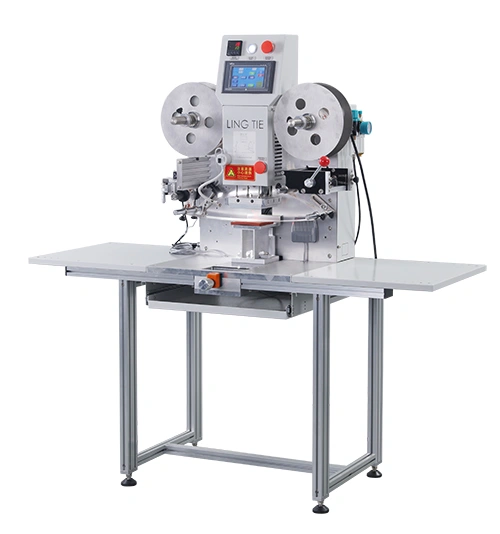
Automatic Heat Transfer Press
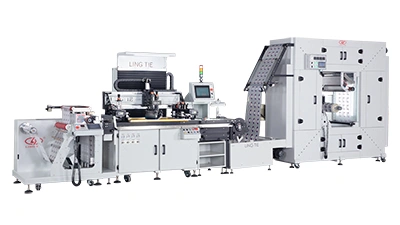
Automatic heat transfer presses apply printed graphics, logos, labels, or text from a transfer material onto the surface of a product. The transfer paper or film is placed against the product, and the press applies the right amount of heat and pressure to transfer the printed design onto the surface. Once the pressing cycle is complete, the transfer film or paper is removed, and the graphic remains on the product. Our heat transfer machines handle the pressing cycle with less manual intervention, which is useful for repeated production of items such as T-shirts, insoles, socks, masks, bags, and other flat or relatively flat products. Depending on the transfer material and process used, heat transfer can also be applied to leather, textiles, plastics, coated metal, wood products, and other compatible surfaces.
- The press runs smoothly with a precision motor and gearbox, and operators can adjust the speed according to the product and transfer process.
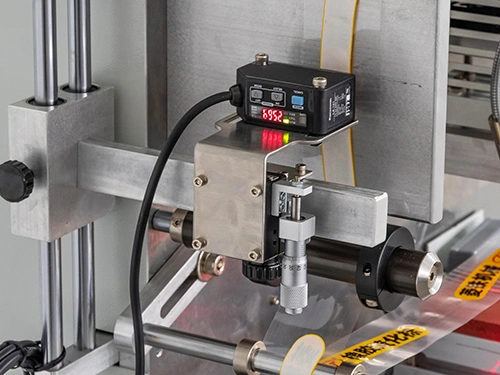
- The color mark sensor reads the registration marks on the transfer film to position each design correctly before it is transferred onto the product.
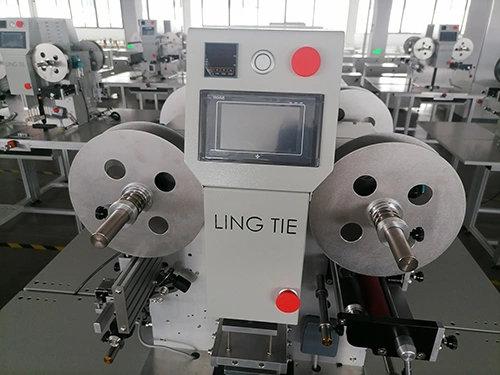
- Operators can check and adjust the main settings directly from the touchscreen, which keeps setup and operation simple.
- The press can switch between automatic and semi-automatic operation according to different production needs. In semi-automatic mode, the operator can use the foot switch to control each pressing cycle more directly.
- The digital temperature controller shows the current temperature and lets operators change the heat setting according to the transfer material and substrate being processed.
-
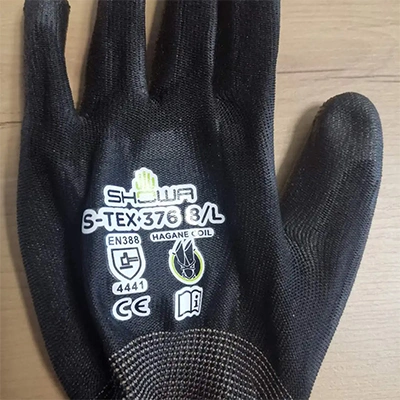 Heat-transfer-printed glove
 -
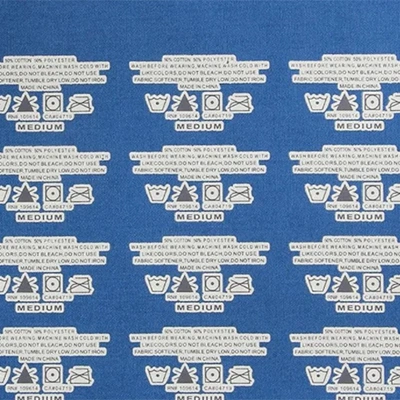 Heat transfer labels for garments
 -
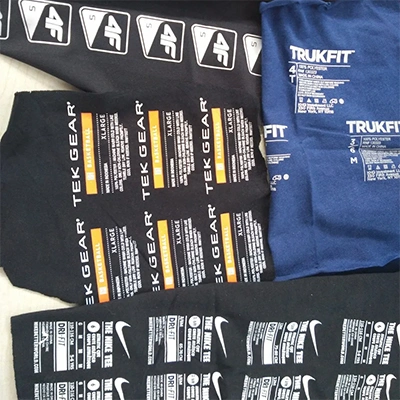 Heat-transfer-printed garments
 -
 Heat-transfer-printed face mask
 -
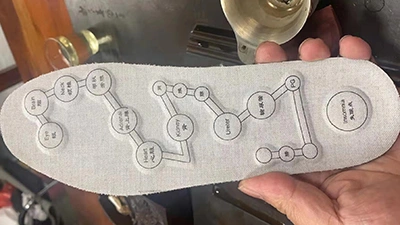 Heat-transfer-printed insole
 -
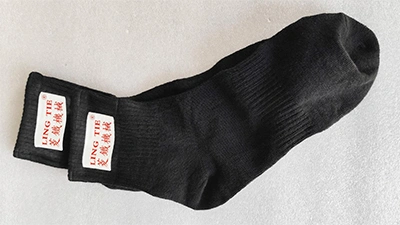 Heat-transfer-printed socks
| Model | LTI-100 (A1 or A2) | LTI-200B (B1or B2) | |
| Max. Transfer Size | mm | 100×100 (custom sizes available) | 200×200 (custom sizes available) |
| Max. Transfer-Film Unwind/Rewind Diameter | mm | O.D. 240 | O.D. 240 |
| Transfer-Film Core I.D. | mm | 25–76 (1–3 in) | 25–76 (1–3 in) |
| Transfer Temperature | °C | Ambient-250 | Ambient-200 |
| Transfer Time | s | 0.1–99 (adjustable) | 0.1–99 (adjustable) |
| Speed | pc/h | 0–3600 (depending on transfer time) | 0–3600 (depending on transfer time) |
| Voltage | V | 1P 220 | 1P 220 |
| Compressed Air Supply | MPa | 0.4–0.6 | 0.4–0.6 |
| Power | kW | 1 | 1.2 |
| Net Weight | kg | 100 | 100 |
| Machine Dimensions (L×W×H) | mm | 1400×500×725 (975) | L680×W500×H745 |
| Worktable Dimensions (L×W×H) | mm | L1400×W590×H1450(1700)(+80adjustable) | L1230×W500×H1500(+80adjustable) |
| Worktable Height | mm | — | 775(+80adjustable) |
-
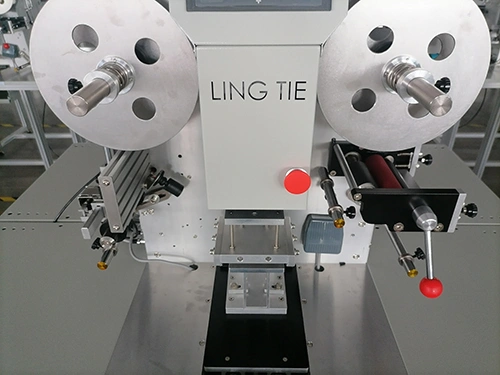
Heated platens are customizable and easy to replace.
-
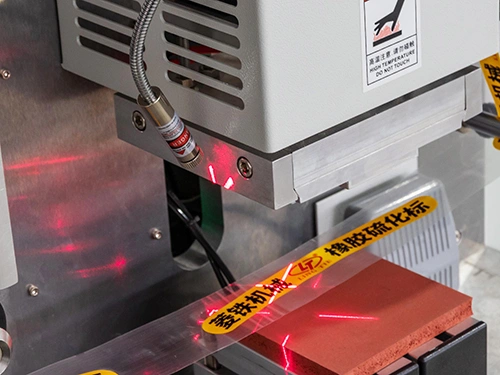
Infrared guide for precise heat transfer label placement
-
Color mark sensor for measuring feed length
-
Settings adjustment via touchscreen
-
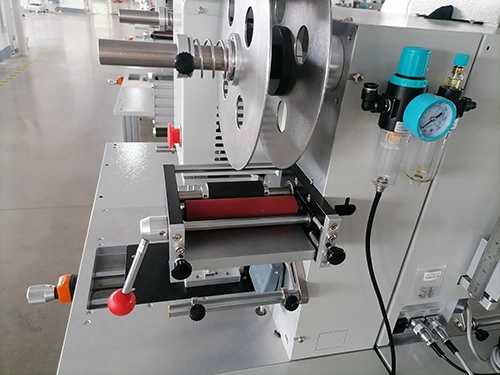
Unwinding and rewinding shafts are available with customizable sizes.
- Good Durability: Heat transfer graphics can resist fading, cracking, and peeling when the correct transfer material and pressing settings are used. They can also retain their color well after repeated washing.
- Suitable for Different Materials: Heat transfer is suitable for more than textiles. Depending on the transfer system and the surface, it can also be applied to leather, acrylic, metal, plastics, wood, coated paper, and other flat or relatively flat materials.